
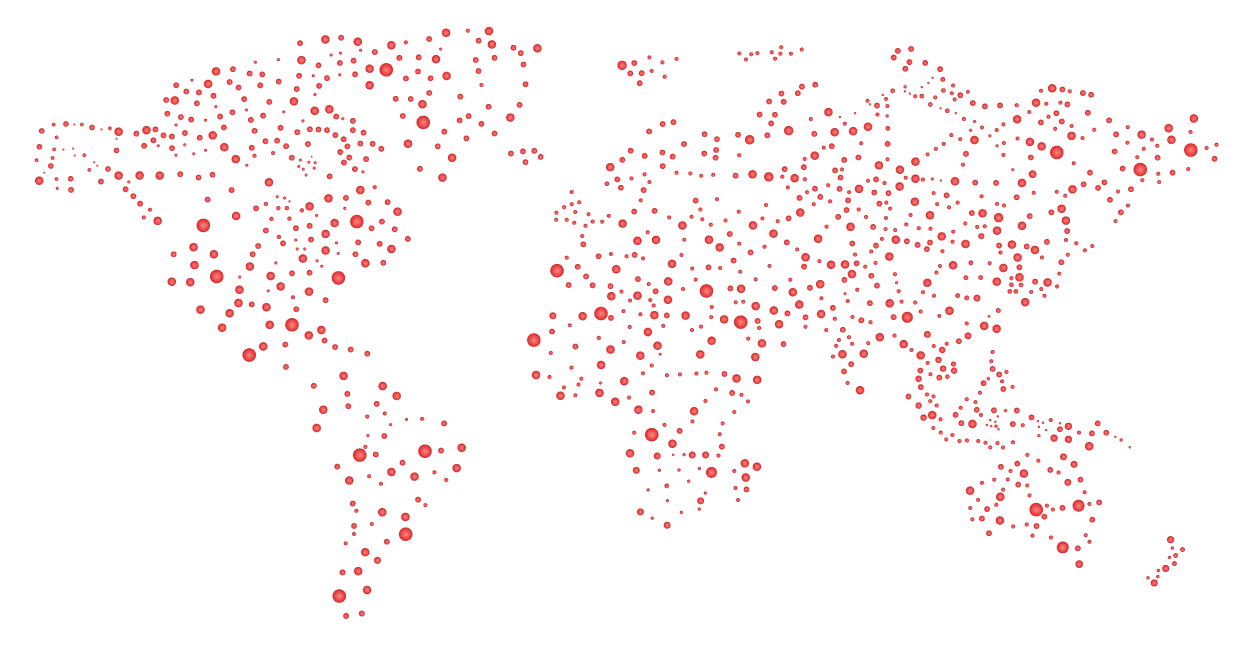
ACID Technologies provides a managed, 24/7/365 dark web monitoring service for organizations in banking and finance, healthcare, education, transportation, government, retail, and other regulated or high-risk sectors. Monitoring is tailored to each client’s keywords and languages, runs continuously, and delivers real-time alerts with enough detail to act.
When a threat appears—an attack still being planned, or data already offered for sale—your team can respond faster: contain exposure, close the gap, and protect operations and reputation.
Why dark web monitoring matters now
Attackers increasingly log in rather than break in. Sophos found that 79% of ransomware attacks in 2026 started with compromised identities—credentials and access that are traded on the dark web and in messaging channels before they are used.
Breaches are also slow to discover. IBM reported a global average breach cost of $4.99 million in 2026, with 183 days to identify a breach and 64 more to contain it. Seeing your data, credentials or name in criminal channels is often the earliest warning an organization gets.
How ACID’s dark web monitoring service works
The service follows four stages—the same stages shown on the ACID homepage:
- Monitor. Automated crawlers, robots and avatars collect new material 24/7/365 from dark web, deep web, leak-site and messaging sources.
- Detect. AI-assisted matching compares every new item against your keywords in the relevant languages, filters noise and scores relevance.
- Alert. At the first hint of a threat, a real-time alert reaches your team with the source, the time first seen, the data exposed and screenshots where possible.
- Mitigate. Your team acts—resetting credentials, blocking access, preparing for an attack or starting incident response—while ACID sends updates as more intelligence arrives.
Sources covered
Threat actors do not stay in one place, so coverage cannot either. ACID monitors:
- Dark web markets and forums, where data, access, malware and services are bought and sold.
- Ransomware and extortion leak sites, where victims are named and stolen data is published. See ransomware leak site monitoring.
- Infostealer log markets and combo lists, a major source of fresh credentials and session cookies. See credential leak monitoring.
- Paste tools and dump sites, used for quick leaks and proof-of-breach samples.
- Chat and messaging platforms, including Telegram, Discord, WhatsApp, WeChat and IRC web chat. See Telegram monitoring.
- P2P networks and the deep web, including unindexed sites and file-sharing services.
- Selected social media, where impersonation and hacktivist campaigns often surface.
What we detect
Because keywords are tailored, detection spans far more than leaked email addresses:
- employee and customer credentials, session cookies and tokens
- network access offered for sale (VPN, RDP, Citrix, cloud consoles)
- databases, documents and source code offered or leaked
- payment and banking data, including BINs and account details
- attack planning, such as DDoS, defacement and hacktivist target lists
- threats and doxxing targeting executives and key personnel
- insider recruitment and offers to sell internal access
- mentions of subsidiaries and key suppliers on leak sites
Example alerts
These anonymized examples show the detail an alert carries:
- Critical — credentials for sale. An infostealer log containing a valid SSO session cookie and saved logins for an employee’s email and CRM appears on a dark web log market. Recommended action: revoke sessions, reset passwords, check the device.
- Critical — network access offered. An access broker advertises VPN access to a company matching the client’s sector, size and country, with a screenshot showing an internal hostname.
- High — attack planning. A hacktivist Telegram channel lists the client’s online banking domain among DDoS targets for a campaign starting in two days.
- High — supplier on a leak site. A payroll provider used by the client is listed on a ransomware extortion site, with a claimed 300 GB of customer files.
Tailored keywords, in the languages that matter
Generic monitoring produces generic results. ACID defines keywords with each client—domains, brands, executives, products, internal system names, payment identifiers and more—and translates them into the languages used by the actors most likely to target them. Keywords support UTF-8, non-Latin scripts and regular expressions, and can be amended at any time as your organization changes.
Precision matters: healthcare records, payment data and R&D intellectual property each need a different keyword strategy. A strong provider adapts to yours rather than handing you a fixed list.
Delivery and integrations
Alerts go where your team already works:
- Dashboard. A centralized view of all alerts, with updates as each case develops.
- Email. Immediate notification to designated contacts.
- SIEM/SOAR. Integration through a RESTful API so alerts enter your existing workflows and playbooks.
- API. Programmatic retrieval of alerts for automation, such as forcing password resets on leaked accounts.
Custom alert templates are available on request, and enterprise clients can run in a private cloud zone for isolation and control. See ACID Enterprise.
Deployment and onboarding
Getting started does not require installing agents or changing your network:
- Scoping call. We agree goals, alert owners and the first set of keywords with your team.
- Baseline. We check what is already exposed, similar to our free dark web scan, so historical exposure can be cleaned up.
- Go live. Continuous monitoring starts and alerts flow to your chosen channels.
- Tune. Over the first weeks we refine keywords with you to cut noise and close gaps.
How pricing works
ACID’s dark web monitoring service is quote-based. The main factors are:
- the number of domains, brands, people and other keywords
- the languages and source types required
- delivery and integration requirements, including private cloud
- whether you add ACID DIP for digital identity protection
Because the service is automated and continuous, it avoids the cost of dedicating scarce analysts to manual searching. Talk to an analyst for a quote based on your scope.
Dark web monitoring vs. breach notification
Breach notification services such as Have I Been Pwned are useful: they tell you when an email address appears in a breach that has already been published. But they have limits for a business:
| Breach notification | ACID dark web monitoring | |
|---|---|---|
| What it checks | Published breach collections | Live dark web, deep web, leak-site and messaging sources |
| Scope | Individual email addresses or a domain | Domains, brands, people, systems, payment data, suppliers |
| Timing | After a breach is published and loaded | As soon as signals appear, including planning stage |
| Languages | Not applicable | Tailored multi-language keywords |
| Output | Notification | Real-time alerts with context, updates and integrations |
For a broader look at the market, see Best Dark Web Monitoring Tools (2026).
What is the dark web used for?
The dark web includes sites that are not indexed by common search engines and are typically reached through anonymizing software such as Tor or I2P. Confidentiality of identity and destination makes the space attractive to cybercriminals who sell malware, stolen data, and Ransomware-as-a-Service (RaaS), coordinate attacks, and trade credentials.
Ideological actors also use these channels to organize activity against organizations they oppose. At the same time, journalists and activists rely on the same privacy properties in restrictive environments.
What types of information are sold on the dark web?
Stolen data commonly includes credit card information, personally identifiable information (PII), login credentials, financial records, and medical data. Motives are usually financial—direct sale or extortion of the original owners.
Does my organization need dark web monitoring?
If you process customer or employee data, develop products, hold trade secrets or intellectual property, or must meet regulatory obligations, you are attractive to attackers. For most organizations, at least one of those conditions applies—so continuous monitoring is a practical control, not a niche add-on.
Early alerts about a planned attack create room to mitigate. Alerts that your data is already posted help you investigate how it was stolen, close lingering gaps, and reduce downstream harm. See how this played out in our case studies from banking, healthcare, energy and government.
Choosing a dark web monitoring service
When evaluating providers, prioritize:
- Coverage — including marketplaces, leak sites and messaging apps
- Precision — organization-specific keywords and relevant languages
- Speed — alerts as soon as signals appear
- Actionability — enough context to choose countermeasures
- Automation — monitoring that does not consume scarce security staffing
Our guide on how to choose a dark web monitoring vendor turns these into a checklist, and Dark Web Monitoring for Business covers how to launch a program.
Why ACID
ACID’s 24/7/365 monitoring is designed to catch planning-stage signals as well as leaked data already for sale. Continuous crawlers and AI-assisted detection use your keywords and languages. At the first hint of a threat, you receive a real-time alert with the available detail—and updates as more intelligence arrives—so you can mitigate impact or stop the attack before it lands.
Related capabilities: credential leak monitoring, ransomware leak site monitoring, Telegram and messaging monitoring, and brand and executive impersonation monitoring.
“The earlier you see planning-stage activity, the more options you have—foil the attack, close the gap, or contain the blast radius before public disclosure.”